I kept coming back to the same three limits. The farm has a $25,000 year-one budget, five years to show real income, and mostly family labor. Every time I looked at a different way of farming, one of those three numbers got in the way.
Row crops wanted equipment and fertilizer I could not afford before anything was sold. Livestock on a scale that might pay wanted fencing and water systems that would use most of the money up front. A high-tunnel market garden could work on a small piece of ground, but the tunnel and the weekly transplants still left almost nothing for a bad season or for anything else the farm might need. None of those paths left room for the five-year clock or for the cottage-food rules I already know I will have to follow.
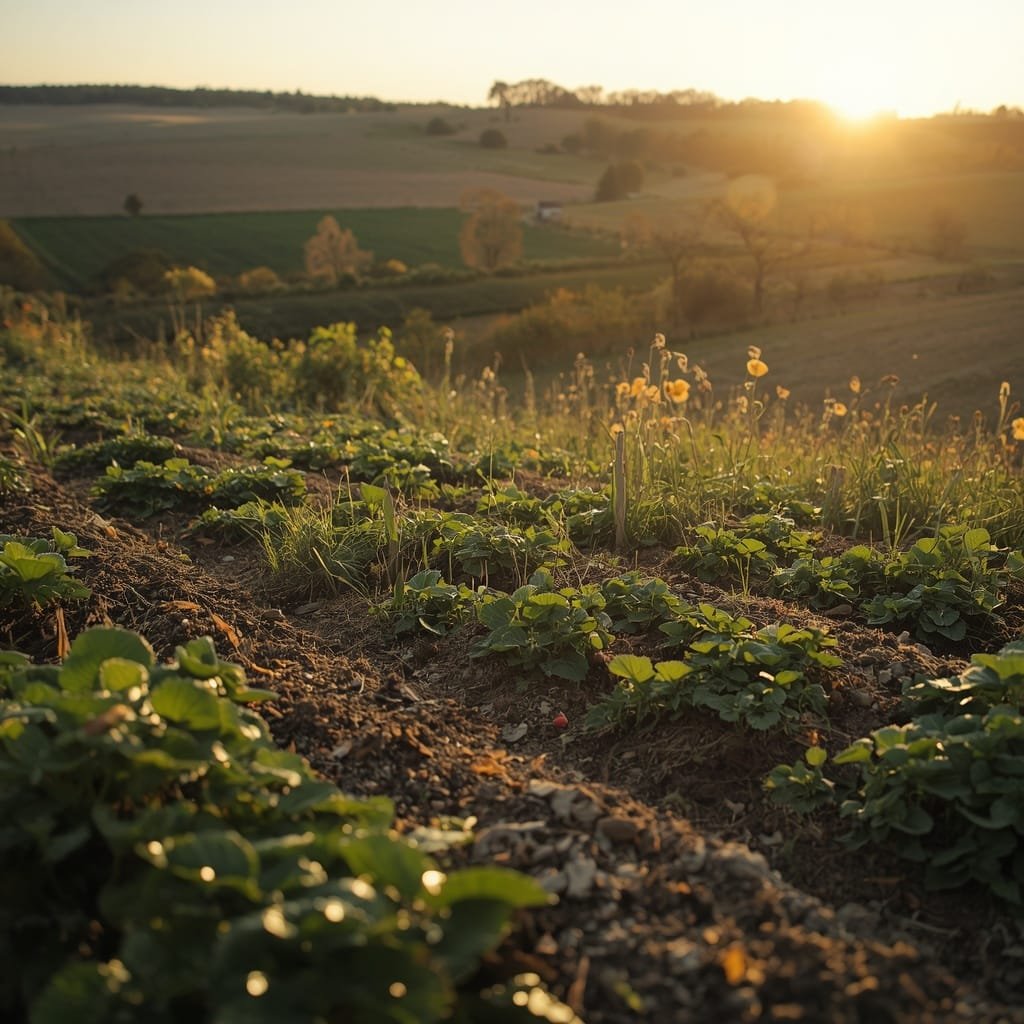
What stayed on the table was a regenerative approach. For this farm that simply means starting with the lowest-cost steps that still give me something I can sell inside five years. Cover crops and very little tillage so I am not buying bags of fertilizer or a tractor I cannot justify. A mix of plants—garden crops or soft fruit—that can become jam, dried goods, or honey under the rules that already exist. Animals only if their feed and fencing fit inside whatever money is left. The point is not to fix an entire landscape. The point is to keep the cash from disappearing before the farm has anything to sell.
That mix is also what gives the system its diversity and flexibility. Because I am not locked into one crop or one type of animal, I can shift what I plant or raise from year to year without rebuilding the whole farm. If soft fruit does well on the slope I end up with, I can lean into jam and dried fruit. If the soil and rainfall favor a garden plus a few hives, honey and herbs can carry more of the sales. A small grazing piece can be added later, or left out, without forcing me to abandon the rest of the plan. The same ground can support more than one enterprise at a time, so a weak season in one product does not erase the others.
That same flexibility is what makes scaling realistic inside the five-year window. I do not have to spend the entire $25,000 trying to build a finished farm in year one. I can start with the lowest-cost pieces—cover crops, a garden or soft-fruit planting, basic tools—and use whatever income shows up in years two and three to add the next layer. Extra fencing, a better water setup, more plants, or a small processing step can come from the farm’s own proceeds instead of from a second round of outside money. The system grows by adding pieces that already fit the soil and the rules, rather than by jumping to a completely different scale.
That low-input start also gives me a little more room when the weather does not cooperate. I already wrote about late freezes and dry stretches. Those hurt less when most of the $25,000 has not already been spent on inputs and payments. Soil that holds water and supports more than one crop means I still have something to take to market if one enterprise fails.
I do not have the land yet, so I cannot lock in the exact mix. Rainfall, slope, and the cottage-food rules in whichever state I end up in will decide whether soft fruit, a garden, honey, or a small grazing piece comes first. Regenerative is just the filter that keeps those choices inside the money and the time I actually have, while still leaving room to adjust and grow as the farm starts to pay for itself. The next step is testing which of those enterprises survive that filter in the states still on the list.