Land is not bought. This is a filter, not a decision. The $25,000 startup budget does not include land or housing, so the state has to keep land, living costs, and infrastructure from eating that budget before a crop exists.
Eight states keep coming up together: Missouri, Kentucky, Tennessee, Arkansas, Oklahoma, West Virginia, Mississippi, and North Carolina. They are on the list for rainfall, season length, land price, and cost of living. They are not a ranking.
| State | Farm real estate, 2026 | Last spring frost | First fall frost | Annual precipitation | The catch |
|---|---|---|---|---|---|
| Missouri | $5,200 | Apr 14 | Oct 21 | 42 in | Ozark listings are steeper and cheaper than the state average. Bottom ground costs more. |
| Kentucky | $5,600 | Apr 14 | Oct 22 | 49 in | The state average includes buildings. Eastern listings are cheap because of slope and access. |
| Tennessee | $6,500 | Mar 31 | Nov 1 | 54 in | Highest land value in this set. Acreage near Nashville or the Smokies is not this number. |
| Arkansas | $4,350 | Mar 28 | Nov 5 | 51 in | Delta and Ozark are different farms. The average hides both. |
| Oklahoma | $2,620 | Mar 28 | Nov 7 | 37 in | Cheapest in the set. Western rainfall is the constraint, not the price. |
| West Virginia | $3,640 | Apr 19 | Oct 16 | 45 in | Price is low because usable flat ground is scarce. Budget for driveway and slope. |
| Mississippi | $3,650 | Mar 15 | Nov 7 | 59 in | Wettest in the set. Delta soil and hill ground are not the same buy. |
| North Carolina | $5,750 | Mar 30 | Nov 5 | 50 in | Mountains, Piedmont, and coast do not share a price or a frost date. |
Whole states are the filter. The next step is regions and real listings inside these eight, not another pass over the whole country.
Climate and Rainfall for a Small Farm
Irrigation is too expensive to rely on at the start, so rainfall is a top filter. I’m looking for places that usually get enough rain during the growing season to support crops without constant watering. Average numbers matter, but so does how that rain is spread through spring and summer.
Sources: NOAA Climate Normals USDA Plant Hardiness Zone Map
Growing Season Length
The growing season has to be long enough to produce something meaningful. Short seasons raise risk and limit options. I’m watching average last spring frost and first fall frost dates because those two numbers show how many productive weeks the land actually gives each year.
Sources: NOAA Climate Data USDA Plant Hardiness Zone Map
Land Cost
The $25,000 Challenge budget does not include land. Still, land cost matters. Every extra dollar spent on acreage is money that cannot go toward the farm itself. I’m looking for areas where rural land is still relatively affordable.
Sources: USDA Land Values USDA NASS Data
Cost of Living
Everyday expenses need to stay low, especially in the early years. Higher cost-of-living areas put more pressure on the farm to make money faster. Property taxes, insurance, utilities, and basic living costs all count.
Sources: MERIC Cost of Living Data Bureau of Economic Analysis
Tax and Business Climate
Some states make it easier and cheaper to run a small farm than others. I’m looking at income tax, property tax trends, and the overall climate for small agricultural businesses. A lighter load here gives the project more room.
Sources: Tax Foundation State Rankings USDA State Fact Sheets
Agricultural Support
Access to extension services, soil testing, and local knowledge is valuable. States with decent support systems for small farms can save time and money while I learn the ground.
Sources: USDA Extension NIFA Extension
Market Access
A farm only works if there is a realistic way to sell what it produces. I’m looking at distance to population centers and whether direct sales already exist in the area. Good land far from customers is less useful.
Sources: USDA Local Food Directories USDA Agricultural Marketing Service
Other Practical Factors
A few more issues will influence the final decision: common soil types, basic zoning rules, longer-term water access, natural risks such as flooding or drought, distance to services, and internet quality.
Sources: USDA Web Soil Survey FEMA Flood Maps
Early Rankings for Choosing a Location for a Small Farm
I’ll be honest about the process. Comparing climate, land prices, cost of living, taxes, support systems, and market access across many states is a large research job. I used public data sources and AI tools to help organize and cross-check the information. These rankings are a starting filter, not a final decision.
When the categories are viewed together, a smaller group of states rises to the top more consistently:
- Missouri
- Kentucky
- Tennessee
- Arkansas
- Oklahoma
- West Virginia
- Mississippi
- North Carolina
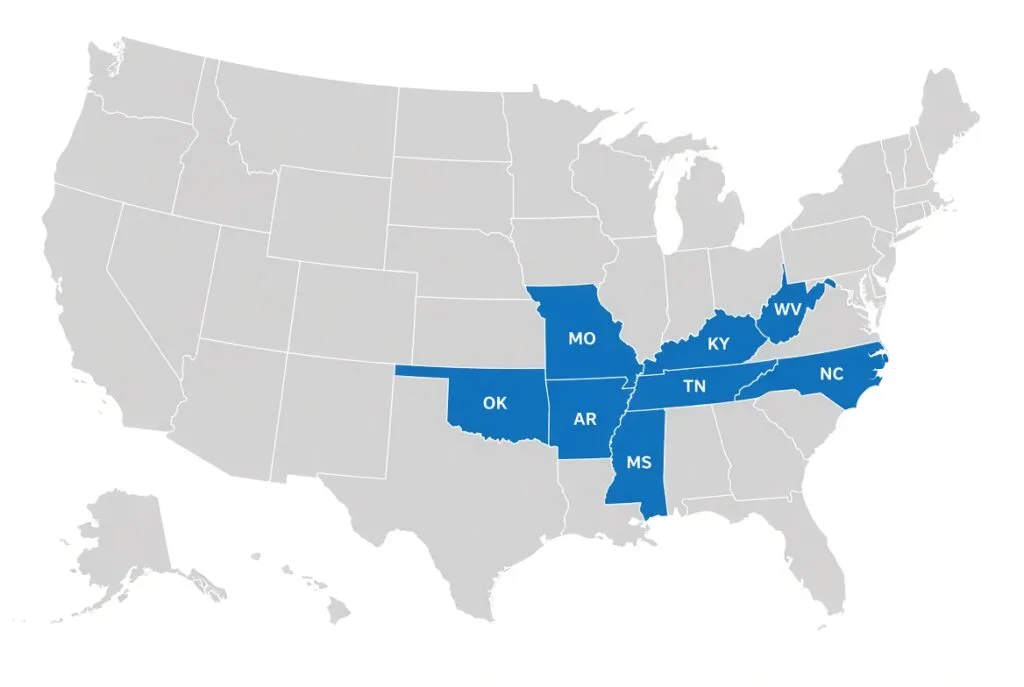
Map of the top states identified in the early research for choosing a location for a small farm
These eight states currently look like the strongest overall fit for the constraints of this project. They offer a workable mix of rainfall, season length, relatively affordable land, manageable living costs, and reasonable access to markets or support.
This is the starting point.
From here the research gets more specific. Instead of treating entire states as uniform, the next step is looking at actual regions, local conditions, and real land listings within these states.
11 thoughts on “Choosing a Location for a Small Farm”